If you follow sports even slightly, you already know this: Indian cricket somehow runs on vibes, leaks, and uncle opinions from WhatsApp. Rohit Sharma sits right in the middle of that chaos. One week it’s “King Rohit, clutch monster,” next week it’s “bhai, he’s done, retire karao.”
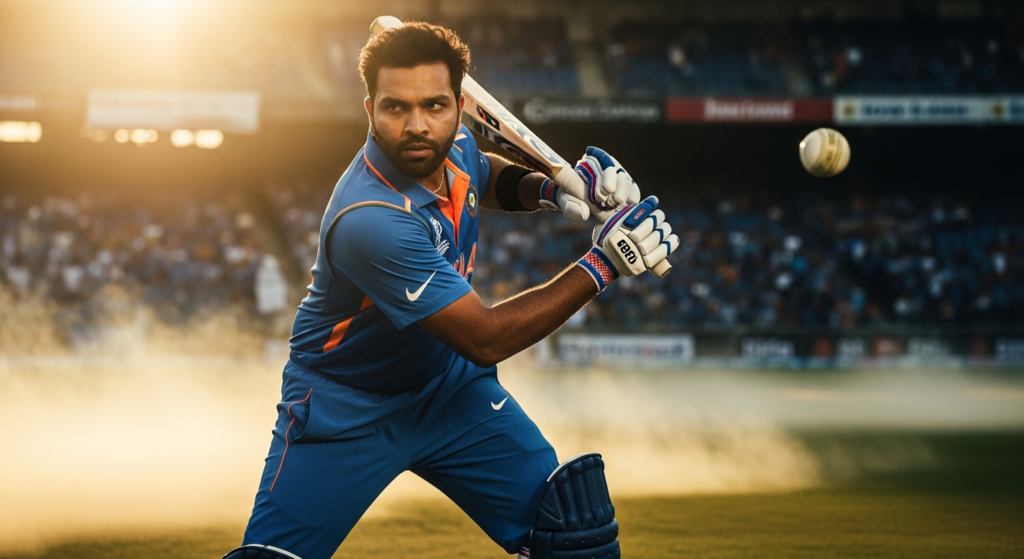
Now in 2026, he’s 39, not captain in every format, missing IPL games with injuries, and still pulling short balls into the stands like nothing has changed. You open Instagram and it’s either a tribute edit or a “finished player” hot take. No middle ground.
This site lives in the sports lane — for the people who argue over strike rates in the metro and mute family groups during India chases. So let’s skip the PR fluff and talk about what Rohit’s actually doing right now, why he’s missing from some matches, what this means for his ODI captaincy, and whether you should brace for retirement or chill.
THE THING NOBODY ACTUALLY SAYS OUT LOUD
Here’s the part most polite cricket articles avoid: Rohit Sharma’s career is in that weird “last season of a hit web series” phase. Still good, still pulling numbers, but you can feel the writers slowly setting up the ending. Nobody wants to admit it because Indian fans treat retirements like breakups.
On paper, he’s still India’s ODI captain and is expected to stick around till the 2027 World Cup, at least according to ex-players like Mohammad Kaif, who literally said he believes Rohit will retire after that tournament. That sounds neat: one last ODI World Cup run, then exit. But reality is messier — fitness, form, selection politics, and a fanbase that flips faster than your For You Page.
In IPL 2026, Rohit’s season has been this strange mix of “vintage” and “wait, why is he missing again?” He started with a bang including a 78 off 38 balls against KKR with a 23-ball fifty that looked like early-career muscle memory kicking in. But then came the injuries: first a toe issue vs RCB, then a hamstring problem that kept him out of multiple games for Mumbai Indians. You know that one friend in your college team who still has skills but suddenly needs a warm-up for the warm-up? That.
Here’s what no one wants to say: Rohit is now officially in the “one-format, carefully managed, ODI-first” era, not the all‑formats workhorse phase. He has already stepped away from Tests and T20Is for India and is now basically an ODI specialist. That’s not a downgrade; it’s a survival mode. But fans raised on multi-format monsters still treat it like a demotion.
You can also see how franchises and BCCI are treating him. He’s not Mumbai’s captain anymore Hardik Pandya has that job but MI still retained him for a massive ₹16.30 crore and relied on him as a senior opener and mentor. That tells you the real story: the people inside the dressing room still think his brain and presence are worth premium money, even if his body needs more maintenance breaks than your hostel Wi-Fi.
And still, scroll through social media after one low score and the comments switch to “bhai bas ab, let Gill/Hardik lead everything.” The funniest bit? Some of these same people will cry about “no experience in big games” when India chokes in a knockout. You can’t bench experience and then complain it wasn’t there when needed.
HOW THIS ACTUALLY WORKS THE REAL MECHANICS
From the outside it looks simple: star player gets older, retires, everyone claps and moves on. In real life, it’s a multi‑season, technically managed transition. Rohit’s current phase is a case study.
First, formats. He’s already cut out Tests and T20Is for India and is locked in as an ODI-only international, with experts expecting him to stay till that 2027 World Cup cycle. In practice, this means his training, workload, and even IPL usage are all shaped around keeping his body alive for 50‑over cricket. Less continuous grind, more targeted bursts.
Second, injuries and “availability.” In IPL 2026, he has missed several games due to a hamstring problem that first showed up in a match vs RCB on April 12. He then sat out clashes against teams like PBKS, GT and CSK, with updates saying he had stepped up training intensity and was close to returning. Later, he was even given the freedom by MI to decide his own availability for a match against LSG, after batting for nearly an hour in practice and doing fitness drills. That’s not drama — that’s what senior players earn: the right to listen to their body and not just the schedule.
Third, role in the IPL. Stat sheets show he’s still doing damage: by the ongoing 2026 season, he had 137 runs in 4 matches at a strike rate above 165, and overall over 7,100 IPL runs in 276 matches. That’s not some nostalgia pick that’s a high‑impact opener who can still flip a powerplay. But instead of handling leadership, he’s now MI’s senior batter and on‑field mentor, while Hardik handles captaincy stress. Think of it like that senior in college who stops running the fest but still tells you where you’re about to mess up.
Where this gets interesting for you as a fan is how decisions are layered:
- Selection committees thinking in cycles (like “2027 is the last dance”).
- Franchises balancing brand value, experience, and pure performance.
- The player managing fitness with more rest days, targeted training and careful returns.
Here are a few realities nobody breaks down clearly:
- Rohit isn’t “injury prone” out of nowhere; 39‑year‑old bodies plus long seasons equal more soft tissue injuries like hamstrings. The trick is management, not miracle recovery.
- ODIs give him more time to build innings and control tempo, which fits his game better at this stage than constant T20 grind.
- MI paying ₹16.30 crore for him and trusting him as senior opener says they still expect match-winning spells, not nostalgia cameos.
Some people look at him missing IPL games and instantly yell “finished.” Others know this is how late‑career legends work now: fewer games, smarter usage, one clear format, and one big target tournament far on the horizon.
What’s actually going on with Rohit right now?
Here’s the niche angle almost everyone skips: how his “still here, but carefully used” phase actually looks week to week.
- Fitness blocks: He ramps up intensity slowly after each injury, training without discomfort before being cleared.
- Selective play: He sits out mid‑season IPL matches to avoid aggravation, then aims for key games and crunch moments.
- Focused international role: One‑format ODI captaincy lets him lock in on one specific style and long‑term plan for the 2027 World Cup.
Lists sound boring, but this is the actual machinery behind the headlines you see.
COMPARISON WHAT’S ACTUALLY DIFFERENT BETWEEN YOUR OPTIONS
Here’s a simple view of where Rohit sits versus the other big India batting-leadership names right now.
If you actually care about India winning another ICC trophy, the sensible move is: let Rohit run the ODI show through the 2027 cycle while grooming Gill, and accept that you won’t see him grinding every IPL game. The “just drop him now and move on” take sounds bold on reels, but it ignores how teams actually phase out legends without collapsing.
WHAT ACTUALLY HAPPENS WHEN YOU TRY THIS
When you actually try to follow Rohit’s current “phase” game by game, not clip by clip, a few patterns show up. You start the IPL thinking, “Okay, he’s not captain, he’ll just bat freely now.” Then he blasts something like that 78 off 38 against KKR, pulling and lofting like he’s 28 again. For a moment, the “finished player” noise goes silent.
Then the fixture list moves on, and suddenly he’s not in the XI. First it’s a toe injury vs RCB. Then the hamstring kicks in, and he misses matches against PBKS, GT, and CSK. You’re checking apps, X, stories — everyone has “updates,” but all of them are basically the same: he’s injured, he’s training again, he “might be available” next match. It feels less like watching a cricketer and more like tracking a limited edition drop.
What most people don’t expect is how much power a senior player has at this stage. Reports say MI have literally given him the freedom to decide his own availability for games while he rehabs and tests his body in practice. That sounds wild if you’re used to school‑level cricket where the coach screams if you even ask for a day off. But late-career greats live in a different reality: their 70% is still better than many players’ 100%, so teams listen.
The part that surprised me is how often the “he’s done” narrative forgets actual numbers. Across his IPL career he’s scored more than 7,000 runs, with the 2026 season showing a strike rate over 165 in his first few games. That’s not someone hanging around for farewell matches. That’s someone whose body occasionally says “nope,” but whose batting still snaps back into top gear when he’s there.
Here’s a pattern most articles ignore:
- Big performance in a high‑profile game, everyone posts clips and rewrites the “vintage Rohit is back” script.
- Short quiet patch or injury layoff, and all the “please retire” commentary resurfaces.
- Official statements remain vague, focusing on “monitoring,” “rehab,” “training intensity,” while insiders talk long-term World Cup plans.
Most people don’t realize they’re reacting to the news cycle, not the actual arc. The real story is pretty simple: India and MI are trying to squeeze maximum value from Rohit’s last few elite years without breaking him before 2027. That looks confusing from the outside — part‑time appearances, ODI‑only, half‑mysterious fitness updates — but from a squad point of view, it’s just asset management.
THE ADVICE EVERYONE GIVES VS WHAT ACTUALLY WORKS
Let’s go through the usual “Rohit discourse” advice you see on social and why most of it is either lazy or incomplete.
1. “He should just retire now and let youngsters play.”
This one sounds logical if you say it fast. The idea is: clear space, hand over all formats to Gill/others, “build for the future.” The problem is, you don’t replace 15+ years of big‑match, captaincy, and ICC experience overnight, especially when your next big ODI World Cup is in 2027.
What actually works: phase him out by format and role. That’s already happening — Tests and T20Is gone, ODIs only, plus controlled IPL usage. You maximize his experience in the one format where his tactical brain and anchor‑plus‑power style still give you a real edge. Youngsters still get chances around him; they just also get someone who’s walked into every pressure situation you can think of.
2. “If he’s injured so much, he shouldn’t play IPL at all.”
You’ll see this from fans who assume “national duty only” is the purest option. Except, IPL is not just money; it’s also where players get high-intensity T20 practice, learn from different coaches, and stay in competitive rhythm. In Rohit’s case, MI have clearly built his role as senior opener and mentor, with a massive retention fee and trust in his presence in crunch games.
What actually works: manage his IPL workload, not delete it. That’s why he missed multiple games with the hamstring injury but ramped up gym and training to return only when he could work without discomfort. The franchise gets clutch performances and leadership aura when he does play; his body doesn’t get smashed by playing every single league match.
3. “If he can’t play every game, he shouldn’t be captain.”
This sort of makes sense on the surface, which is exactly why BCCI and MI moved on leadership earlier than they moved on his batting role. Hardik has MI captaincy now, and Gill is already being groomed as India’s all‑format leader while Rohit retains ODI captaincy. That separation is deliberate.
What actually works: split responsibility. Let younger players handle full‑calendar captaincy in some formats, while Rohit leads in ODIs and adds tactical input across formats without carrying the full workload. It’s the difference between asking someone to be “boss of everything” versus “specialist in the one thing you still dominate.”
4. “He’s only there for brand value now.”
Tempting to say when you see giant hoardings and sponsor posts. But if franchises only cared about brand, they wouldn’t pay ₹16.30 crore for an opener who can still smack 23‑ball fifties and mentor a young core. Teams track every run, every phase, every matchup.
What actually works: see brand and performance as linked. As long as he’s scoring quickly (strike rate above 165 this season) and winning sessions, the brand bit is a bonus, not the main justification. When the numbers fall off and the body can’t handle even managed workloads, that’s when both brand and cricket logic push towards retirement — not because fans shouted it first.
THE PRACTICAL PART WHAT TO ACTUALLY DO

You’re 18–25, scrolling between classes or work, trying to make sense of this “Rohit latest news” mess. Here’s what you can actually do instead of just joining the noise.
- Track patterns, not one match.
Stop deciding his entire career based on one bad innings or one injury-forced absence. Watch how he performs over mini‑blocks — say, 4–5 IPL games when fit, or an entire ODI series. Look at strike rate, intent, and how often he still changes the game, not just average. - Check the source of every “update.”
When you see “Rohit to retire soon?” type headlines, see where it comes from. Is it an ex‑player like Kaif speculating about 2027? Is it actual BCCI communication? Or just a content creator chasing views? Once you start sorting noise from real information, the drama level drops fast. - Understand his current role before judging.
Know this: ODI captain for India, ODI‑only internationally, senior opener and mentor for MI, no Test or T20I for India anymore. Once you accept that, you stop expecting him to do 2019‑style workload and start evaluating him like what he is now — a late‑career specialist. - Watch how teams treat him, not just what fans say.
MI paying ₹16.30 crore and publicly trusting him with mentoring, and reports of giving him autonomy over availability, tell you more about his real value than a rage tweet. When teams quietly start sidelining someone from key games even when fit , that’s when you know their internal verdict has shifted. We aren’t there yet. - Prepare yourself for the 2027 timeline.
If you’re emotionally attached, realistic expectations help. Based on current chatter, the smart money is on Rohit staying through the 2027 ODI World Cup and then stepping away. That gives you around one major cycle more of captain Rohit — treat it like final seasons, not endless reruns. - Use this as a template to read other careers.
What’s happening with Rohit right now — formats slimmed down, managed fitness, mentoring, one big target tournament — is exactly what will happen with your other favorites in 5–7 years. Once you see the pattern here, every future “is he finished?” The narrative starts making a lot more sense.
QUESTIONS PEOPLE ACTUALLY ASK
How old is Rohit Sharma now in 2026?
He’s 39 years old in 2026. Which is exactly the age where international players start choosing formats carefully if they want to last. Don’t compare that to 25‑year‑olds sprinting through every game.
Is Rohit Sharma still India’s captain?
Yes, he remains India’s ODI captain, with many expecting him to stay in that role until the 2027 ODI World Cup. He has already retired from Tests and T20Is, so you won’t see him leading in those formats. Think of him as India’s one‑format general now.
Why is Rohit missing so many IPL 2026 matches?
Because his body, surprisingly, is not made of titanium. He picked up injuries this season — first toe, then a hamstring vs RCB — which forced him to miss several games for Mumbai Indians. MI took the cautious route, letting him ramp up training and even giving him freedom to decide his own availability once he was close to fitness.
Is Rohit Sharma still good in IPL or just surviving?
He’s still very much in the “dangerous if he gets going” category. In the ongoing 2026 season, he has scored 137 runs in 4 matches at a strike rate of around 165, which is elite powerplay batting. Add performances like his 78 off 38 against KKR, and you can see he’s not just vibing in the XI for nostalgia.
Will Rohit Sharma retire after the 2027 World Cup?
No one has put out an official retirement date, but former cricketers like Mohammad Kaif have openly said they believe Rohit will retire after the 2027 ODI World Cup. It fits the pattern: he’s now an ODI specialist, heading towards one final big tournament cycle. Treat it as a likely endpoint, not a guarantee.
Why isn’t Rohit captain of Mumbai Indians anymore?
Because MI shifted to a new leadership phase with Hardik Pandya taking over. Rohit’s role has changed from full‑time captain to senior opener and mentor, while still being one of their highest paid players at ₹16.30 crore. It’s a role change, not a complete downgrade — leadership without the full-time stress.
Is Rohit Sharma injury prone now?
He’s 39, plays high‑intensity cricket, and has a long mileage of international and IPL seasons behind him. Soft tissue issues like hamstring injuries naturally become more common. That doesn’t make him “fragile,” it just means his workload has to be managed smartly, which is exactly what MI and India seem to be doing.
What formats does Rohit Sharma play right now?
Internationally, he plays only ODIs for India. Domestically, he’s still a core part of Mumbai Indians in the IPL as a senior opener and mentor. No Tests, no T20Is for India — that phase is done.
Is Shubman Gill going to replace Rohit as captain?
Most signs point in that direction long‑term. Kaif and others have already spoken of Gill as the future all-format captain, and he’s already leading in Tests and serving as vice-captain in T20Is. The idea is clear: Rohit handles this ODI cycle, Gill grows into the main role after.
SO WHERE DOES THIS LEAVE YOU?
So here’s where we actually are: Rohit Sharma is not the all-format workhorse anymore, but he’s also nowhere near “just hanging around.” He’s a one‑format ODI captain, a premium IPL opener, and a 39‑year‑old whose body now needs the kind of management your engineering project group wishes they’d used for deadlines.
If you’re 18–25, you’re watching the end‑game phase of a modern great in real time. That means fewer innings but more context in each one. Every ODI, every big IPL knock, every injury update now feels like part of the countdown. It’s not clean, it’s not dramatic, it’s just sports reality.
The one concrete thing you can do today? Pick one upcoming MI match or India ODI and actually watch Rohit’s entire innings — not just reels. Observe his intent, shot selection, running, and body language. Then decide where you think he really is on the “finished vs still vital” spectrum. It won’t fix the chaos, but at least your opinion won’t be borrowed from some loud stranger’s thumbnail.
You made it here, which already proves you care more than the average “Rohit finished?” Commenter who doesn’t even know which format he still plays. You’re watching the slow, complicated phase of a legend’s career — the part that never fits cleanly into a tribute video.
If there’s one line to keep in your head, let it be this: a player’s last great years don’t look like their peak, but they still decide tournaments. Rohit’s story now isn’t about chasing 2019 numbers; it’s about whether his experience and selective firepower can still drag India and MI through big nights.
So argue, meme, complain when he nicks off for 7 you’re a fan, that’s the job. Just remember you’re also living through the final chapters you’ll tell someone about later like, “Yeah, I watched that guy’s last World Cup cycle live. It was messy. And it mattered.”
Meta description:
Rohit Sharma latest news: injured, not captain, still smoking bowlers at 39. Click before another “Is Rohit finished?” reel wastes your data.