There’s normal cricket. Then there’s India vs Pakistan in a World Cup. You don’t “watch” that. You build your whole day around it, pretend to be chill, and then lose your mind over a wide ball.
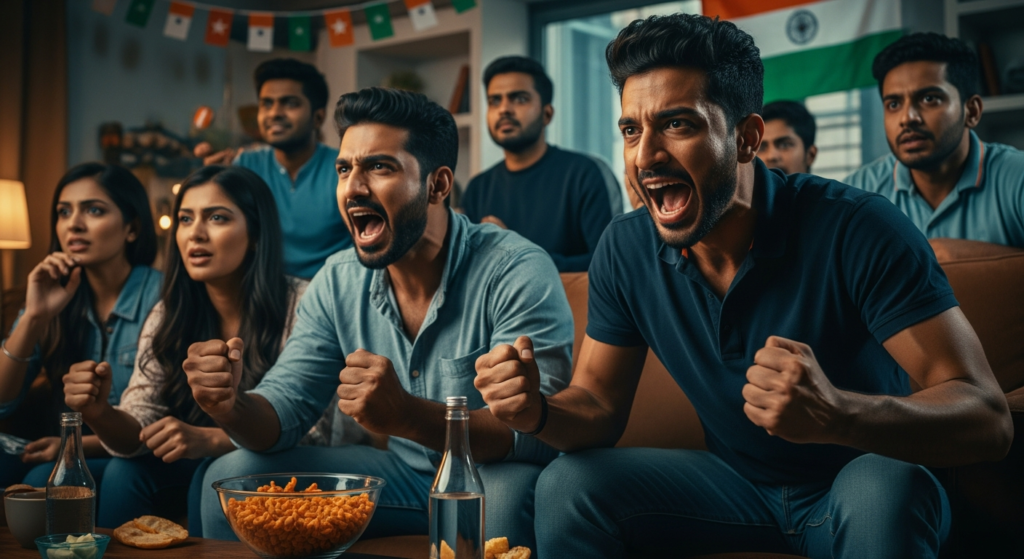
This site is built exactly for that version of you — Indian, 18–25, who knows very well this is “just sport” but still checks the fixtures like exam dates. And for 2026, the big red circle on that mental calendar was 15 February: India vs Pakistan, T20 World Cup, R. Premadasa Stadium, Colombo, 7 PM local.
On paper, India won by 61 runs. In reality, that game casually extended an 8–1 T20 World Cup head‑to‑head, stretched India’s streak in ICC white‑ball tournaments, and gave you enough memes to last till IPL.
Let’s talk about what this match actually was — beyond the scoreboard screenshot your uncle still has in the family group.
THE THING NOBODY ACTUALLY SAYS OUT LOUD
Here’s the thing nobody really says: India vs Pakistan 2026 wasn’t about “who’s better.” It was about who handles shared trauma better on a Sunday night.
By the time this T20 World Cup rolled around, the script was messy. India had an absurd record in ICC events: unbeaten against Pakistan in ODI World Cups (8–0) and leading 8–1 in T20 World Cups. Pakistan’s only T20 World Cup win? Dubai 2021. Since then, India beat them in 2022 and 2024 and came into 2026 on a ridiculous limited-overs streak, with 11 consecutive T20 World Cup wins and 16 straight in ICC white-ball events overall.
So when everyone said “form doesn’t matter in India vs Pakistan,” what they meant was: we know the numbers, but we don’t trust our hearts with them.
This time, the stage was different:
- Tournament: T20 World Cup 2026.
- Venue: R. Premadasa Stadium, Colombo — under lights, full noise, Sri Lankan humidity doing its thing.
- Group: A. Both India and Pakistan came in unbeaten — India had smashed USA by 29 runs and Namibia by 93 runs, sitting on a +3.050 NRR; Pakistan had beaten Netherlands and USA, sitting at +0.932.
Everyone pretended this was “just another group match.” Nobody believed that.
India batted first and hit 175/7 in 20 overs, built around Ishan Kishan smacking 77 and the usual mix of top-order moments and late-innings chaos. Pakistan, chasing 176, folded for 114 in 18 overs. India won by 61 runs, which in a T20 World Cup India–Pakistan context is not a defeat, it’s a full storyline reset.
India vs Pakistan 2026 didn’t just add another W in the column — it reinforced that ICC white‑ball games between these two are now more about India managing expectations than about “breaking jinxes.”
And the part nobody says, but everyone in your WhatsApp chats felt:
- For Indian fans your age, this rivalry is not balanced. You’ve grown up with 2007 bowl‑out, 2011 Mohali, 2022 Melbourne, 2024, and now 2026 Colombo as core memories.
- For Pakistani fans your age, Dubai 2021 is the one bright, loud exception. Everything else feels like reruns from a channel they secretly want to block.
So when you watched this match, you weren’t “just watching.” You were checking if the pattern holds. That’s why, when India pulled off another controlling performance and extended that 8–1 T20 World Cup record, it didn’t feel like a surprise. It felt like confirmation of something you half-believed but didn’t dare say out loud.
This is also why this fixture hits differently compared to, say, a random group game vs Namibia. The stats, the streak, the memes — they’re not separate. They’re how your generation processes this rivalry now: less fear of losing, more fear of being the generation when the streak finally breaks.
HOW THIS ACTUALLY WORKS THE REAL MECHANICS
Strip away the emotion, and the 2026 India vs Pakistan T20 World Cup game looks very… structured. The ICC did not schedule this by vibes.
First, the tournament design:
- T20 World Cup 2026 runs from 7 February to 8 March, across five venues in India and three in Sri Lanka.
- India and Pakistan were both placed in Group A, with India playing games in Mumbai, Delhi, Ahmedabad and then Colombo, and Pakistan based in Colombo for their early fixtures.
- The ICC and broadcasters made sure India–Pakistan was a prime-time standalone event: Match 27, Group A, 15 February 2026, night game at R. Premadasa, Colombo.
Now the match itself:
- India innings: 175/7 in 20 overs. Ishan Kishan top-scored with 77; others chipped in around him to set a total that felt “above par but chaseable if someone plays a blinder.”
- Pakistan chase: all out 114 in 18 overs. India’s bowlers squeezed hard, picked regular wickets, and never let a chase rhythm build.
- Result: India won by 61 runs, adding another T20 World Cup win to their head-to-head and boosting net run rate even more.
Head‑to‑head context by then:
- ODI World Cups: India 8–0 Pakistan.
- T20 World Cups: Before this game, India 7–1 Pakistan. After this game, India 8-1.
Niche angle generic pieces skip: how this one group match fit into India’s larger ICC pattern. By February 2026, India were on:
- Eleven consecutive wins in T20 World Cups.
- Sixteen consecutive wins across ICC limited‑overs tournaments (World Cups, Champions Trophy, etc.) — the longest such streak in men’s cricket history.
Short list, with opinions:
- R. Premadasa, Colombo as venue
This wasn’t just aesthetic. Colombo’s R. Premadasa is known for turn, humidity, and noise — it rewards teams that can handle pressure plus conditions. For India, used to the subcontinent chaos, it was almost a “home away from home.” - Timing in the group
This wasn’t the first match. Both sides arrived with two wins and strong NRR, which meant the game was about topping the group and narrative dominance, not pure survival. That ironically made the cricket cleaner — no panicky “must-win first game” energy. - Match‑up styles
India’s batting depth plus improved T20 bowling unit against Pakistan’s often top‑heavy batting and streaky death bowling is a structural advantage. In 2026, that structural gap showed more than ever. - NRR and psychological carry‑over
A 61‑run win in a World Cup group game doesn’t just give you 2 points. It gives you a monster NRR boost and sends both teams into later games with very different vibes. India looked freer. Pakistan looked like they were carrying another scar.
This match wasn’t random. It was the result of long-term patterns in schedule, squad building, ICC politics, and plain cricket logic. You can love or hate that, but you can’t call it pure luck.
COMPARISON WHAT’S ACTUALLY DIFFERENT BETWEEN YOUR OPTIONS
“India vs Pakistan 2026” can mean a few different things in people’s heads. It helps to separate them.
If you’re writing, arguing, or just mentally bookmarking this, treat 2026 Colombo as part of a T20 World Cup storyline, not some isolated freak result. My recommendation: when someone says “yeh rivalry 50–50 hai,” ask: “In which era and which format ?” It changes the entire conversation.
WHAT ACTUALLY HAPPENS WHEN YOU TRY THIS
When you actually try to watch an India vs Pakistan World Cup match like a normal T20, you realize that’s impossible. This one was no different.
On 15 February, your day probably went something like this:
- Woke up “normal,” pretended to care about classes or work.
- Remembered around breakfast: today is that match, in Colombo, night game.
- By afternoon, everything you did was synced to “how many hours till toss.”
When the match started, it was chaos disguised as routine. The first 2–3 overs felt like an exam hall: silent, fake calm, everyone pretending they’re not stressed. As India built their total — Ishan Kishan opening up, forming key partnerships — you could feel that shift from “is this enough?” to “this might actually be serious scoreboard pressure.”
The thing that probably surprised you when you watched it live (or followed ball‑by‑ball): how early Pakistan’s chase felt in trouble even before they were mathematically dead. 176 is not an impossible target. But subcontinent conditions, India’s bowling control, and a growing history of these chases going wrong made every dot ball feel heavier.
Pattern I noticed — and a lot of people don’t talk about:
- In recent ICC meetings, India haven’t just “scraped wins.” They’ve controlled large phases: 2022 chase in Melbourne, 2024 win, and now defending a strong total in Colombo.
- Pakistan often start okay and then hit a wall somewhere between overs 8–14 — not an all‑out collapse immediately, but a slow suffocation where required rate climbs and the innings loses shape.
When the match ended, you probably did some version of:
- Sat there in silence for a second, like after a big paper goes weirdly well.
- Opened every group to see memes, scorecards, and That One Guy claiming he “told you earlier only” it would be easy.
- Retweeted or shared the updated T20 World Cup head‑to‑head graphic that casually says “India 8–1 Pakistan.”
What most articles miss entirely: this match also changed your baseline expectation. Earlier, India vs Pakistan World Cup games felt 50-50 in your gut, even if numbers said otherwise. Now, for most of your generation, it’s almost reversed — you expect India to win, and your real fear is: “What if this is the year the streak snaps?”
That’s not just about skills. It’s about how repetition shapes emotion. 2026 Colombo added one more brick to that mental structure.
THE ADVICE EVERYONE GIVES VS WHAT ACTUALLY WORKS
Now for the “wisdom” people throw around India-Pakistan games — and why half of it is useless.
- “Form doesn’t matter, it’s a different game.”
People say this because it sounds poetic and safe. But coming into 2026, India were on an 11‑match streak in T20 World Cups and 16 straight ICC limited‑overs wins. Pakistan had one T20 World Cup win against India in 2021, then losses in 2022 and 2024. Form absolutely mattered — not as guarantee, but as structure.
What actually works: respect form and match‑ups, but hold a 10–20% “chaos allowance” for this rivalry. That keeps you honest without pretending stats don’t exist. - “These matches decide who is the better team overall.”
No, they don’t. Overall head‑to‑head across all formats still tilts to Pakistan thanks to older eras, but recent ICC and T20I history heavily favors India. A single 61-run win in Colombo does not rewrite Test history; it reinforces modern white-ball dominance.
What actually works: talk era-wise and format-wise. “Right now, in ICC T20 events, India are clearly ahead” is a far more accurate and grown-up take than shouting about total matches ever played. - “Don’t overhype it; treat it like any other game.”
Cool in theory. But your body doesn’t care. When it’s India-Pakistan in a World Cup, your heart rate goes up, your screen time spikes, and your productivity falls off a cliff. Pretending you don’t care usually just adds guilt.
What actually works: acknowledge it is a big deal to you, then build your day around that honestly — finish tasks earlier, plan viewing with people you like, mute people who drain joy. - “Just enjoy the match, don’t obsess about streaks and numbers.”
Except streaks and numbers are literally what make this rivalry unique. India’s 8–0 ODI World Cup record and now 8–1 T20 World Cup lead are insane sporting stats. Ignoring them is like ignoring score in a game.
What actually works: use numbers to add context, not anxiety. “This is part of a long pattern” can actually make you calmer because it feels less like random judgment day and more like another chapter in a big book.
Respect your own brain here. You’re allowed to care a lot and still think clearly. Those two things are not opposites
THE PRACTICAL PART WHAT TO ACTUALLY DO
You can’t replay 15 February 2026, but you can actually learn how to handle and use India-Pakistan matches better going forward.
- Watch the full highlights, not just clips
If you only saw reels, find a full highlight package or extended replay of the 2026 match — from India’s 175/7 with Ishan Kishan’s 77 to Pakistan’s 114 all out. You’ll understand how the game is built, not just the big shots and wickets. That helps you learn what real control looks like in T20, beyond vibes. - Save one solid explainer on the rivalry numbers
Bookmark a clean India vs Pakistan head‑to‑head explainer that breaks it by format — Tests, ODIs, T20Is, ODI World Cups, T20 World Cups. Next time someone throws random “overall 212 matches” at you, you have actual context instead of screenshots from some fan page. - Decide your match‑day rule for big fixtures
For the next India vs Pakistan in an ICC event, set a rule now: either “no major tasks after 4 PM” or “no doom‑scrolling about the game till toss time.” That sounds trivial, but it saves you from wasting the entire day in half-anxiety mode and still failing to enjoy the game fully. - Separate “cricket joy” from “online argument”
Use the 2026 match as proof: the actual 61‑run win was over in three hours, but arguments lasted for days. Decide how much energy you’re okay spending online after a game. Set a soft limit — maybe 30 minutes of scrolling/memes and then log off. - Use matches like this to actually understand T20 better
Instead of just screaming “chokers” or “beasts,” look at why India’s structure — powerplay approach, middle‑over bowling options, death‑over plans — keeps working in T20 World Cups. If you play cricket or even fantasy, this is real learning, not just emotional content. - Don’t let one result define your whole fandom
2026 felt amazing if you’re Indian. But one day, the streak might break. Prepare mentally now: your relationship with this rivalry should survive one bad night just like Pakistani fans live with multiple ones. Taking the long view is what makes you a real fan, not just a scoreboard tourist. - Keep a “big games” calendar for ICC events
Add future big ICC fixtures — next India vs Pakistan World Cup matches, knockout windows — to your phone calendar once schedules drop. That way, you don’t stumble into them unprepared, and you don’t “accidentally” plan something important during those evenings.
QUESTIONS PEOPLE ACTUALLY ASK
When was India vs Pakistan 2026 played?
The India vs Pakistan T20 World Cup 2026 match was played on 15 February 2026. It was Match 27 of Group A, scheduled as a night game starting at 7 PM local time in Colombo. The game was part of a tournament that ran from 7 February to 8 March across India and Sri Lanka.
Where was the India vs Pakistan 2026 match held?
The match took place at R. Premadasa Stadium in Colombo, Sri Lanka. It’s a venue known for big-match atmosphere, slowish pitches, and spin coming into play under lights. Hosting India vs Pakistan there gave the game a neutral but still subcontinental flavor that both teams are familiar with.
Who won India vs Pakistan 2026 and by how much?
India won the T20 World Cup 2026 clash by 61 runs. They scored 175/7 in 20 overs and then bowled Pakistan out for 114 in 18 overs. It was a comprehensive result, not a last‑over scrape, and it boosted India’s net run rate in the group significantly.
Who was the hero for India in the 2026 game?
Ishan Kishan was the standout batter, scoring 77 and anchoring India’s 175/7. His innings set the platform for a total that always felt slightly above par on that surface. India’s bowlers then shared the work, with a disciplined attack that kept Pakistan under pressure throughout the chase. It was one of those matches where one batting performance plus collective bowling did the job.
What is the India vs Pakistan record in T20 World Cups after 2026?
After the 2026 game, India lead Pakistan 8–1 in T20 World Cups. Their first meeting in 2007 ended in a tie that India won via bowl‑out, and Pakistan’s only T20 World Cup win came in Dubai in 2021. India then beat them in 2022, 2024, and again in 2026, extending a dominant run in ICC T20 events.
How does the overall India vs Pakistan cricket rivalry look now?
Across all formats (Tests, ODIs, T20Is), Pakistan still lead the overall head-to-head due to early dominance in Tests and ODIs. But in recent years, especially in ICC tournaments and T20Is, India have taken clear control. India also maintains a perfect 8-0 record against Pakistan in ODI World Cups, which is one of the wildest streaks in cricket.
Why is the 2026 match considered so important?
Because it reinforced several narratives at once. It extended India’s T20 World Cup lead to 8–1 vs Pakistan and lengthened an already historic ICC white‑ball winning streak. It also came with both teams unbeaten in the group before that game, so it felt like a proper heavyweight clash, not a mismatch. For fans your age, it’s another key memory in a rivalry that’s increasingly one-sided in ICC events.
Did Pakistan really threaten to boycott this game?
There were reports and discussions before the tournament about Pakistan’s participation and the venue for matches vs India, including talk around the Colombo fixture. However, the ICC schedule went ahead with India vs Pakistan on 15 February at R. Premadasa, and the match was played as planned. The boycott noise became part of the build-up storyline, not the actual outcome.
Where can I watch full highlights of India vs Pakistan 2026?
Official highlights are typically available on ICC’s digital platforms, broadcasting partners’ apps, and major cricket sites’ video sections tied to the specific match center (look for IND vs PAK, 27th Match, Group A, T20 World Cup 2026). Avoid random reuploads on sketchy sites; they’re often low quality or get taken down. Stick to official or big‑platform sources for the best viewing experience.
SO WHERE DOES THIS LEAVE YOU?
So where does India vs Pakistan 2026 leave you, as a fan who has probably seen more memes than overs by now? Somewhere between proud and weirdly numb.
You’ve now watched another World Cup where India didn’t just survive Pakistan, they dominated them — 175/7 playing 114 all out, 61‑run margin, another tick in an 8–1 T20 World Cup record. For your generation, this rivalry is less “are we cursed?” and more “we better not be the unlucky batch when things flip.” That’s a massive shift from how older fans grew up.
One concrete thing you can do today: instead of just saving the final score graphic, bookmark one proper India–Pakistan rivalry explainer and this match’s full highlight package, and revisit them before the next ICC clash. That way, when everyone starts screaming again, you’re not running on noise — you actually remember what happened and why.
It’s not simple, and it’s never just cricket with this fixture. But maybe that’s the point — this is the one game where your stats brain and your emotional brain both get to go full power, and 2026 just gave them one more very loud reason to agree.
CONCLUSIO
If you’ve stayed till here, you’re not just farming hype. You actually care why that 61-run win feels so heavy.
Now you know: the February 15th game in Colombo wasn’t just another IND vs PAK; it sat on top of an 8–1 T20 World Cup record, an ICC streak that’s ridiculous, and a generation of fans who now expect India to own this fixture more often than not. You also know enough detail to talk about it without sounding like you only saw the final score on Instagram.
If there’s one line to keep, maybe it’s this: India vs Pakistan 2026 didn’t change the rivalry it confirmed the version your generation secretly already believed in.
Meta description:
India vs Pakistan 2026 wasn’t “just another T20”. It was a 61 run therapy session for one side and a full identity crisis for the other. Here’s the real story.