If you’re an Indian football fan in 2026, you basically live in a permanent state of emotional whiplash. You watch the World Cup like it’s a festival, but your own team is… watching with you. You know more about Argentina’s third-choice left-back than about the right-back in your own ISL club. You can list all 16 host cities in North America, but you still have to explain to relatives that “No, beta, this World Cup is not in India.”
This site is about sports the way you actually live them: YouTube highlights, group chats, half-watched matches during exams, and dreams that are way bigger than AIFF’s planning. You’re 18–25, online all the time, and World Cup 2026 is the closest thing football has to an MCU crossover event — 48 teams across Canada, Mexico and the USA, and somehow India still didn’t make the cut.
So let’s drop the brochure voice. You’re not here for “What is the FIFA World Cup?” You’re here for: what does 2026 actually mean for Indian fans, for Indian football, and for that tiny part of you that still believes we’ll see the Blue Tigers in a World Cup before your hairline starts running away.
THE THING NOBODY ACTUALLY SAYS OUT LOUD
Here’s the part nobody prints on glossy posters: FIFA World Cup 2026 is the biggest, most expanded World Cup ever — 48 teams instead of 32 — and India still did not qualify. Eight direct slots from Asia plus a possible ninth through playoffs, and we somehow found a way to miss even that bus. That’s not bad luck. That’s a system problem wearing a jersey and pretending it’s “building for the future.”
The harsh truth is this: Indian football fandom is world-class; Indian football structure is still figuring out how to not trip over its own shoelaces. You have teenagers in Lucknow, Guwahati, Kochi pulling all-nighters for Champions League, arguing tactics like mini-analysts, and then the national team goes into World Cup qualifying and finishes third in its group with one win in six games. Tell me that doesn’t feel like watching your toppers friends get 99% while you’re stuck because the teacher never showed up.

Most official-sounding pieces will say things like “India’s dream of qualifying for 2026 ended after a brave fight against Qatar.” You and I watched that “brave fight.” It was effort, sure, but it was also yet another reminder that our fitness, depth, and mentality are nowhere near what you see from top Asian teams like Japan, South Korea, Iran, or even emerging sides who actually convert chances. The expanded format gave Asia 8.5 spots. India still couldn’t make it out of the second round.
Here’s the line nobody wants to say in plain English: For 2026, India wasn’t unlucky; India just wasn’t good enough, and pretending otherwise is insulting to the fans who actually watch the games. You’re smart enough to understand that. You saw the performances. You saw how often we struggled to break even mid-ranked Asian defences, while teams from smaller populations build tight, organized systems and quietly grab those World Cup spots.
And yet, every four years, we go through the same routine. New hashtag campaigns. Emotional ads. Some “Imagine India at the World Cup” montage where a kid in a narrow lane juggles a ball like he’s going to be scouted off an Instagram reel. Then reality: qualification formats that require consistency over many matches, not just “one big night,” and a federation that always seems half a cycle behind what modern football demands.
If you’re 18–25, you grew up in the era where the World Cup is not just a tournament; it’s content. Reels, edits, memes, player vlogs, everything. You’ll watch matches hosted in places like New York, Los Angeles, Mexico City, Toronto, Vancouver, and Seattle, all with stadiums that look like alien spaceships compared to most Indian grounds. You’ll cheer for countries you have no passport connection with, while your own team’s biggest recent headline is “narrowly misses out… again.”
Here’s the part that stings more with each cycle: you’re not asking for miracles. You’re asking for basic competence. A serious youth pipeline. Coaching standards that don’t feel 20 years late. Real investment that doesn’t exist only during World Cup content season. Instead, you get short-term tournaments, rebrands, and another “roadmap” PDF no one reads outside press conferences.
So yes, 2026 is huge. It’s historic for the world. But for India, it’s also a mirror. And if you actually look at it properly, without the patriotic filter, it’s not a flattering angle.
HOW THIS ACTUALLY WORKS THE REAL MECHANICS
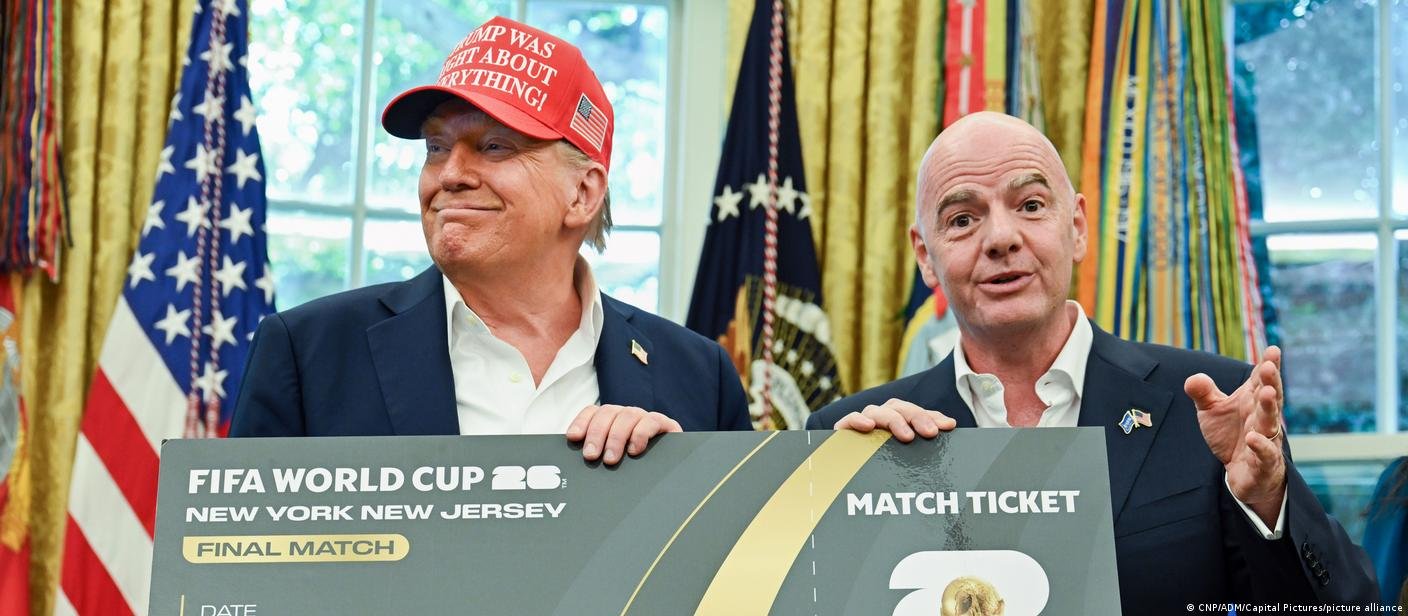
Let’s cut through the vibe and talk mechanics: what does FIFA World Cup 2026 actually look like, and where does India fit into that ecosystem — as a team, and as millions of fans? Start with the basics. This edition is the first with 48 teams, split across three host countries: USA, Mexico and Canada. There are 16 host cities, from Mexico City and Guadalajara to Toronto, Vancouver, Los Angeles, New York/New Jersey, Dallas, Miami, and more. Most matches are in the US, with iconic venues like MetLife Stadium, AT&T Stadium, and Estadio Azteca taking centre stage.
Because of the expansion to 48 teams, FIFA rebalanced the qualification spots. Asia (AFC) now gets eight direct slots plus one intercontinental playoff spot. On paper, that sounds like “Finally, India has a chance.” In reality, the qualifying structure is a marathon. Teams go through multiple rounds, starting with lower-ranked sides playing off, then joining higher-ranked nations in group stages with home-and-away fixtures. To reach the World Cup, you have to consistently finish in top spots across stages, not just score one upset win and make a documentary about it.
India’s path? For 2026, it stopped early. The team finished third in its second-round group, with just one win in six matches, behind stronger Asian nations. Finishing outside the top two meant no progression to the third round, where the actual World Cup slots are decided. And that’s the key mechanic people gloss over on social media: the structure is designed to filter out exactly the kind of inconsistency that has defined India’s campaign.
How does this hit your life? Picture it like semester exams. Top Asian teams are those kids who revise all year, turn in assignments, and walk into finals half-ready but still chill. India is the guy who wakes up one month before finals, buys three new pens, makes a timetable, studies two chapters, and then complains the paper was “too long.” The format doesn’t reward “potential”; it rewards systems.
Here’s the part generic articles ignore: the 2026 World Cup isn’t just a tournament; it’s also a blueprint for where football money, content, and attention will flow. Host cities in North America are investing heavily in infrastructure, promotion, and tourism. That means more global brands, bigger sponsorships, and expanded fan experiences — fan festivals, viewing parties, and digital engagement tailored for markets like India where millions watch but the team doesn’t play.
So what are your actual “options” as an Indian fan in 2026?
- You lock into the tournament as a neutral, pick a team (or three), and ride the drama.
- You track India’s situation from a distance: IFAs, youth tournaments, Asian Cup build-up.
- You use 2026 as your reality check for what needs to change in Indian football before 2030.
- You decide this is the cycle where you stop being just a spectator and actually plug into the ecosystem — local clubs, coaching, content, analysis, whatever your lane is.
Because here’s the boring but true bit: between World Cups is where real progress happens. The 48-team format is not a free entry pass for countries that are “big in population but small in planning.” It’s an invitation. Some nations grabbed it. We didn’t. Yet.
COMPARISON WHAT’S ACTUALLY DIFFERENT BETWEEN YOUR OPTIONS
| Option | What it actually does | Who it’s for | The catch |
|---|---|---|---|
| Pure neutral World Cup fan | You binge the 2026 FIFA World Cup, pick favourite players or teams, and enjoy top-level football in North America without stressing over India not being there. | Perfect for fans who already follow European clubs or global football and simply want world-class matches, storylines, and chaos. | Easy to slowly disconnect from Indian football completely, which doesn’t help the sport grow locally. |
| Emotional “maybe 2030” India fan | You treat 2026 as a painful preview while tracking India’s rebuild, youth development, Asian Cup qualification, and hoping the next cycle finally changes things. | Best for fans who still believe India can realistically reach a World Cup someday and are willing to stay emotionally invested. | Hope alone changes nothing. Watching and tweeting without deeper involvement can become pure coping. |
| Active Indian football participant | You use 2026 as motivation to engage directly with Indian football through local playing, coaching, scouting, content creation, analytics, or club support. | Ideal for people who want football to be more than entertainment — maybe even a skill, side hustle, or career path. | Takes real time, discipline, and effort, with zero instant rewards or guaranteed success. |
If you want my recommendation: go with a mix of the second and third. Enjoy 2026 as a global fan, sure, but keep at least one eye on what’s happening in Indian football, and pick one tiny role where you’re not just a background character. Because if everyone stays only in “neutral fan” mode, don’t act shocked when 2030 looks exactly the same.
WHAT ACTUALLY HAPPENS WHEN YOU TRY THIS
When you actually try to be more than a passive World Cup viewer as an Indian fan, a few things hit you fast. First, following 2026 itself is ridiculously easy. Matches stream at odd hours, clips flood your feed, and the host stadiums look like someone gave a tech billionaire a blank cheque — MetLife in New York, SoFi in Los Angeles, Estadio Azteca in Mexico City, AT&T in Dallas, all over your timeline. You’ll be in group chats arguing over whether the expanded format ruined the “purity” of the World Cup while simultaneously loving the chaos of more underdog teams.
Then you look back at India’s side of the story and it feels… slow. You start tracking how we actually performed in the 2026 qualifiers — that third-place finish in the second round, the loss to Qatar, the lack of goals, the same familiar pattern. You see other Asian teams navigate the same format, same continent, same scheduling, and somehow they punch their ticket to North America while we’re back to “rebuilding.”
What surprised me most when I tried to engage deeper wasn’t the gap in talent; it was the gap in structure. In practice this means things like: players not getting enough games at a high level, youth tournaments being short or irregular, and coaching in many academies still stuck in old-school methods while modern football is all about pressing, transitions, and data-backed training. You see fans who can break down Pep Guardiola’s tactics but local coaches who don’t have the resources to teach even basic positioning properly.
There’s also a pattern you notice that most articles skip: every World Cup cycle, Indian interest spikes massively during the tournament and then drops off a cliff once it’s over. You get full bars during big matches, Instagram stories full of flags, and then once the final is done, half of that energy never converts into people showing up for local league games. Meanwhile, countries that actually qualify use the World Cup as a launchpad to grow domestic interest in a sustained way.
[IMAGE PLACEHOLDER 2: A painfully generic stock photo of a guy in a suit holding a football in a boardroom, looking serious, while everyone else looks confused — perfect metaphor for committees trying to “plan” Indian football.]
Most people don’t expect how lonely it feels trying to care consistently. You start following I-League or ISL, you look for tactical breakdowns, you try to support youth tournaments, and half your circle zones out the moment the content isn’t shiny or European. But that’s also where the leverage is. The ones who stick around between World Cups — analysts, creators, players, fans — those are the people who slowly change what the baseline looks like.
So yes, when you try to take 2026 seriously from an Indian perspective, it’s frustrating. And still, weirdly hopeful. Because once you see the mechanics clearly, the problem stops feeling like “destiny” and starts looking like bad planning — and bad planning is fixable.
THE ADVICE EVERYONE GIVES VS WHAT ACTUALLY WORKS
Let’s talk about the usual script you hear around World Cups and India — the kind of advice that sounds motivational on reels but collapses the second you look at actual qualifiers data.
1. “Just support Indian football more and things will improve.”
This sounds nice, and yes, fan support matters. But it’s incomplete. You can’t fan-wish your way past a qualification format that demands long-term planning, consistent coaching, and robust youth development. If everything else stays the same — chaotic scheduling, short-term tournaments, underfunded grassroots — more people watching ISL isn’t suddenly getting India into a World Cup with 48 teams. What actually works: support plus pressure. Watch, yes, but also ask hard questions, share data, highlight issues, and back people who are trying to fix the structure, not just ride hype.
2. “We have 1.4 billion people, so it’s only a matter of time.”
This one is basically emotional math. If population was the main criteria, India and China would be permanent World Cup fixtures. Instead, India still hasn’t played a single World Cup match, even with an expanded format in 2026 and extra Asian slots. What actually works: smaller but better-organized systems. Countries with way fewer people build tight, efficient pipelines where the best kids are identified early, coached well, and pushed through competitive leagues. That’s what India has to copy, not just say “so many people, yaar.”
3. “After 2026 expansion, qualification will become easier for India.”
You can already see how that went. Asia got eight direct spots plus one playoff, and India still went out in the second round by finishing third in its group. The expansion made it easier for countries that were already close, not for those far from the cutoff. What actually works: treat every cycle like a serious project — using data from previous qualifiers, planning friendlies against the right level of opposition, and building a squad that’s not shocked by high-intensity matches.
4. “Just believe and anything is possible.”
Look, belief is cute. It makes nice ads. But Qatar didn’t become Asian champions off belief. Japan didn’t keep making World Cups off vibes. They did it with structure, coaching, and clear pathways from local pitches to national teams. For India, belief without change is just coping. What actually works: small, boring, repeatable upgrades — better coaching courses, more competitive youth leagues, clear calendar, and serious sports science.
This isn’t me being negative. This is respect. You’re old enough to handle the truth without it being sugar-coated in nationalism and marketing. If anything, the real respect is this: You deserve analysis that treats you like someone who watches the full match, not just the highlight reel.

THE PRACTICAL PART WHAT TO ACTUALLY DO
Let’s assume you’re not running AIFF, you’re not a billionaire, and you still want 2026 to mean something more than “watching Argentina vs Brazil at 2:30 AM.” What can you actually do from where you are?
First, pick one team to follow deeply this World Cup not just your usual favourites, but maybe a mid-level Asian or African team that actually made it. Track their journey, system, and style. Compare that to where India is. It will give you a realistic picture of the gap, not just the scorelines.
Second, plug into Indian football content that isn’t just memes. Look for serious channels, blogs, or creators breaking down tactics, youth systems, and league structures. When those people talk about qualification formats, or how Asia’s eight slots work, or what went wrong in India’s 2026 campaign, listen. Share the good stuff so it reaches beyond the same 500 diehards.
Third, pick a local action. That can be as small as joining or supporting a local club, showing up to a stadium instead of only watching on TV, or volunteering at school/college tournaments. It’s not glamorous, but that’s where future players and coaches come from — not from reaction videos.
Fourth, if you play, treat this cycle as your benchmark. Look at the level of intensity, fitness, and tactical understanding you see in 2026, especially from Asian teams. Be honest with yourself. Then train accordingly instead of pretending “just talent” will bridge that gap.
Fifth, use your online skills. You’re 18–25, which means you’re basically a content machine when you care. Create threads, videos, explainers about how qualifying actually works, why India fell short again, and what needs to change before 2030. Make Indian football harder to ignore.
Sixth, when you argue, argue with facts. When someone says, “Bro, 48 teams, we should’ve qualified,” you should be able to explain the AFC format, Asia’s eight slots, India’s group performance, and where we dropped points. That’s how you shift the conversation from “we deserve it” to “we have to earn it.”
Seventh, allow yourself to still enjoy the World Cup without guilt. You didn’t design the qualifiers. You didn’t schedule the friendlies. You’re allowed to love the sport fully while still demanding better from your own system.
QUESTIONS PEOPLE ACTUALLY ASK
Did India qualify for FIFA World Cup 2026?
No, India did not qualify for the 2026 FIFA World Cup. The team finished third in its second-round AFC qualifying group, with just one win in six matches, which wasn’t enough to progress. Only the top two from the group moved into the third round, where World Cup spots are decided. So for 2026 in North America, India will be watching like the rest of us.
Where is FIFA World Cup 2026 happening?
The 2026 World Cup is being hosted across three countries: the United States, Mexico and Canada. There are 16 host cities, including New York/New Jersey, Los Angeles, Dallas, Miami, Mexico City, Guadalajara, Monterrey, Toronto and Vancouver. Most matches will take place in US stadiums, with Mexico and Canada hosting key games including the opener in Mexico City’s Estadio Azteca.
How many teams will play in FIFA World Cup 2026?
There will be 48 teams in the 2026 World Cup, up from the usual 32. This expansion means more slots for each continent, including eight direct places for Asia plus one intercontinental playoff spot. It also means more matches and a longer tournament, which is great for viewers but makes scheduling and player workload more intense.
How many Asian teams can qualify for World Cup 2026?
Asia has eight guaranteed spots for the 2026 World Cup, plus one extra place available through an intercontinental playoff. That’s a big jump from the four direct places (plus one playoff) available for the 2022 edition. The Asian qualifiers are structured over several rounds to filter teams down to those eight or nine spots.
Why is India still not in the World Cup even with 48 teams?
Because the issue was never just “not enough slots.” Asia got more spots, but the competition for those places is still intense. India struggled in the second qualifying round, finishing third in its group instead of the top two required to advance. Until the team can consistently beat mid-level Asian sides and handle long qualification campaigns, extra World Cup spots won’t automatically include India.
Can India still reach a future World Cup, like 2030?
Yes, it’s possible — but not by accident. The expanded format isn’t going away, so Asia should still have strong representation in 2030. For India to get there, the focus has to be on long-term planning: better youth development, more competitive domestic structures, and smarter preparation for qualifiers. Whether that happens depends on what is actually done between now and the next cycle, not on hashtags.
Is it worth following World Cup 2026 if India isn’t playing?
If you love football, yes. The 2026 edition will be massive: three host countries, 16 cities, 48 teams, and more underdog stories than ever. You also get a live look at the level India needs to reach — especially when you watch other Asian teams who made it. Just don’t let the entertainment distract you from the reality of where Indian football stands.
How does AFC World Cup qualifying actually work now?
Asian qualifying is spread across multiple rounds. Lower-ranked teams start early, with winners joining higher-ranked teams in bigger group stages. From there, teams play home-and-away matches, and the top teams advance through stages until the World Cup spots are filled. The design rewards consistency over many games, not just one-off shocks.
What should Indian fans focus on between World Cups?
Use World Cups as checkpoints, not the whole story. Follow India’s qualifiers, Asian Cup campaigns, and domestic leagues in between. Support serious analysis and people trying to fix structural issues instead of only hype content. If you care now, you’re more likely to see real progress by the time the 2030 cycle gets serious.
SO WHERE DOES THIS LEAVE YOU
You’re in a familiar place: another World Cup where the whole world is partying and India is outside the guest list, looking through the glass. 2026 is bigger, louder and more global than ever, with 48 teams, three host countries and a qualification system that theoretically made it easier for new nations to join in. And still, India fell out in the second round of Asian qualifiers.
This doesn’t mean “give up.” It does mean stop pretending the only thing between India and the World Cup is vibes. The data is clear, the formats are public, and the performance gaps are visible in every qualifier highlight. If change happens, it will be because enough people got tired of the same script and decided to build something different — on the pitch, in analysis, in coaching, in administration, and yes, even in content.
So here’s one concrete thing you can do today: pick one lane where you’ll stop being just a spectator. Maybe it’s playing seriously at your level, maybe it’s making smart football content instead of only memes, maybe it’s backing local clubs or calling out lazy narratives around India and World Cups. None of that is easy. None of it gives you instant “We qualified!” dopamine.
But if you want to be part of the generation that doesn’t have to imagine “India at the World Cup” through ads alone, this is where it quietly starts — not in some FIFA promo, but in what you decide to do once you close this tab.
You actually reached the end, which means you care more than you’ll ever admit in public. Good. Hold on to that. World Cup cycles will come and go in North America, Europe, wherever, but your timeline as an Indian fan is longer — and messier — than any tournament bracket. If nothing else, remember this: the World Cup is not just 90 minutes on a screen; it’s a four-year exam of who did the boring work.
So scream for your favourite team in 2026. Spam reels. Lose sleep. Just make sure that somewhere in the middle of all that noise, you also keep asking the one question that actually matters for India: “Okay, but what are we changing before the next one?”
Meta description:
FIFA World Cup 2026 is in North America, India still isn’t there, and you’re somehow more invested than ever. Here’s the honest Indian fan guide you actually need.