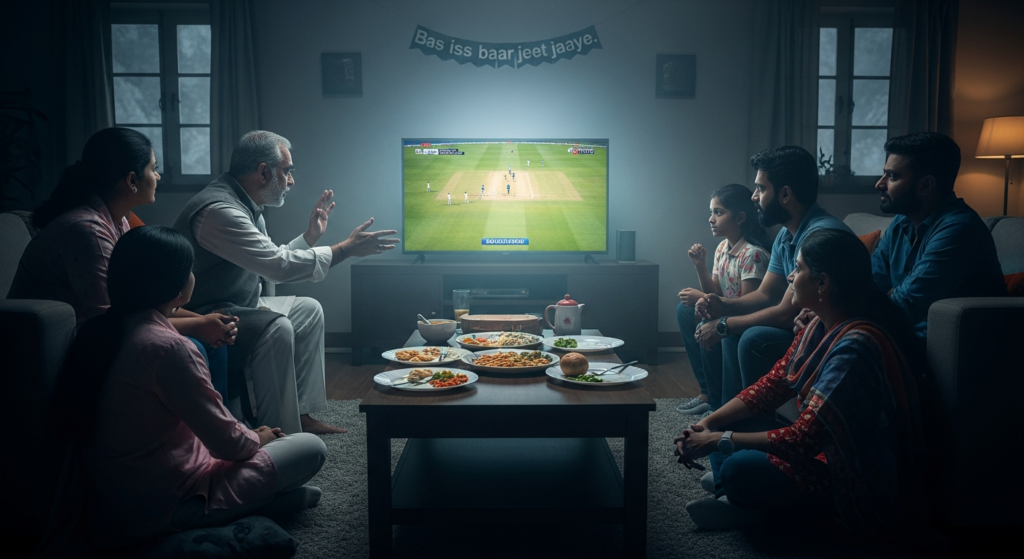
There’s a very specific silence in an Indian house when a World Cup knockout starts. TV volume up, plates parked, random chachu doing live astrology based on who wins the toss. Everyone says the same line: “Bas iss baar jeet jaaye.” And no one mentions 2014, 2016, 2021, 2022.
This site is built for that silence. For people 18–25 who’ve grown up on ICC trauma, fantasy leagues, and 3 AM tactical threads, not just “play with intent” gyaan. The 2026 Men’s T20 World Cup hits different because it’s at home (and in Sri Lanka), it comes two years after India finally lifted a T20 World Cup again, and this time the story is: defend the crown in your own backyard.
From 7 February to 8 March 2026, 20 teams, 55 matches, eight venues, and one team you will over‑analyze into dust. Let’s talk about where India actually stands in all this — not the poster version, the real one.
THE THING NOBODY ACTUALLY SAYS OUT LOUD
Here’s the part the official promos will never admit: most Indian fans are more scared of another knockout heartbreak than excited about a “home T20 World Cup carnival.” You’ve seen this movie too many times. 2016 semi vs West Indies, 2022 semi vs England, that cycle where we dominated rankings and died in playoffs. Even winning the 2024 T20 World Cup hasn’t fully reset that wiring — it’s just made 2026 feel like the season two finale you’re scared to binge.
The 2026 Men’s T20 World Cup is co-hosted by India and Sri Lanka, from 7 February to 8 March. Twenty teams, 55 matches, five venues in India (Delhi, Kolkata, Mumbai, Chennai, Ahmedabad) and three in Sri Lanka (including Kandy and two Colombo grounds). More than 1.3 million people are expected throughout the tournament. On paper, this is peak home advantage. In your head, it’s also peak pressure.
Group stage? India are fine. They topped their first-round group with 4 wins in 4 matches and a monster net run rate of 2.500, finishing ahead of Pakistan, USA, and Netherlands. Home pitches, familiar crowds, and the fact that India are ranked No.1 in T20Is with 273–275 rating points meant they arrived as favorites anyway. This is the part everyone expected: India walking their group like it’s an extended home series.
But the uncomfortable truth: this tournament isn’t about whether India can dominate; it’s about whether they can handle their own success without choking when it flips from “festival” to “final.” Group A with India, Pakistan and USA is made for content — packed stadiums in Kandy and Colombo whenever Pakistan play, template India-Pakistan drama, and viral clips before the Super 8s even start.
Nobody says it out loud, but there’s a reason former players keep talking in “process and combinations” language. The squad itself shows how ruthless the setup is being. Shubman Gill — once hyped as future all-format leader — isn’t even in the World Cup squad. Suryakumar Yadav captains the side, with other reports and predictions suggesting people like Hardik Pandya or even Axar Patel as deputies in various discussions, while Aakash Chopra openly talked about Hardik replacing an out‑of‑form Gill as vice‑captain. That’s not a cosmetic change. That’s “we are not losing another ICC event because we were sentimental.”
And then there’s the pressure of defending champions. India and Sri Lanka qualified automatically, along with top sides from 2024 (Afghanistan, Australia, Bangladesh, England, South Africa, USA, West Indies), plus Ireland, New Zealand and Pakistan via rankings. India walked into 2026 not as “chasing glory” but as the team everyone wants to knock off at home. It’s like going for viva as the class topper — the expectation is different, the mistakes feel louder.
HOW THIS ACTUALLY WORKS THE REAL MECHANICS
If you just see posters, the 2026 T20 World Cup looks simple: “20 teams, India & Sri Lanka hosting, big stadiums, prime time.” But the structure is actually built to test depth, not just vibes.
First, the tournament layout. 20 teams, 55 matches, split into a group stage, Super 8s, and knockouts. The first round has four groups of five teams each; each team plays four games, and the top two from each group go to the Super 8s. India’s group stage numbers — 4 wins from 4, 8 points, net run rate 2.500 — show how much they bullied that phase. Pakistan followed them through from the same group, with 3 wins and a healthy NRR of 0.976.
Venues matter more than people realize. India’s matches and many Super 8/knockout games are stacked across big Indian grounds like Ahmedabad, Mumbai, Chennai, Kolkata and Delhi, with some group games and Pakistan‑heavy fixtures based in Sri Lanka (Kandy and Colombo). What this actually means: India get their comfort zones — slower Chennai, batting-friendly Mumbai, and a chaos cauldron in Ahmedabad — while still dealing with Sri Lankan pitches for some opponents in early rounds.
Now, the nerdy part that actually affects your stress levels:
- India qualified as hosts, plus as defending 2024 champions, and entered 2026 as No.1 in T20I rankings.
- Sri Lanka also qualified as co-hosts; the rest were decided by 2024 performance (top 7) and ICC rankings as of 30 June 2024.
- So this World Cup is basically a mash‑up of merit and commercial logic — hosts, big markets, and actual cricket performance all baked together.
The niche angle other articles skip: what India’s squad choices actually tell you.
India’s World Cup 2026 squad announcement dropped in December 2025 and it was… cold. Gill was dropped. Reports had Suryakumar named captain with a combination built around aggressive batting, multi‑skill players, and flexible finishers. Former opener Aakash Chopra’s predicted squad and comments hinted that Hardik’s leadership value and all-round role kept him central even when form was under scrutiny. The message is clear: this isn’t a sentimental farewell tour for anyone. This is a trophy defense.
Here’s a short list with actual opinions, not brochure text:
- Host factor – Co‑hosting with Sri Lanka gives India home crowds and familiar venues, but also adds political, logistical, and pitch variety layers. Best for: teams with adaptable gameplans. Catch: fans think “home = guaranteed win,” which it never is.
- 20‑team expansion – More chaos, more Associate sides, more upset potential. Great for neutral fans, stressful if you’re supporting the favorite expected to cruise.
- Super 8 structure – Reduces fluke runs; only teams surviving the group grind get here. Best for India, who love consistency; the catch is you now have more high-pressure games before semis.
- India’s No.1 ranking – Builds confidence and fear factor; India entered the tournament as the top T20I side with rating around 273. Catch: increases expectation; every close game becomes “bottle job or not?” discourse.
Once you understand these mechanics, the tournament stops looking like “one fantasy league event” and starts looking like what it really is — a month‑long exam where India has to keep proving 2024 wasn’t a one‑time miracle.
COMPARISON WHAT’S ACTUALLY DIFFERENT BETWEEN YOUR OPTIONS
Let’s compare the three “Indias” people are carrying in their heads for this World Cup.
| Option | What it actually does | Who it’s for | The catch |
|---|---|---|---|
| “Defending Champions” India | Comes in as 2024 T20 World Cup winners and current T20I No.1 side. | Fans who believe momentum and confidence carry cycles. | Past win increases pressure; everyone raises their game against you at home. |
| “ICC Trauma” India | The version shaped by 2014–2022 knockouts and heartbreak memories. | Fans who flinch every time India bat second in a knockout. | Can’t process current reality; treats every wobble like proof that “nothing has changed.” |
| “New Leadership, No Sentiment” India | Reads the 2026 squad reset (Gill dropped, combinations focus) as a fresh, ruthless approach. | People who care more about tactics than nostalgia. | Hard to accept for fans attached to certain players; If it fails, criticism will be brutal. |
If you want to stay sane, lean into the third option. Accept that this is a different kind of campaign: India at home, with a sharper, less emotional squad logic, trying to prove that 2024 started an era, not a one‑off.
WHAT ACTUALLY HAPPENS WHEN YOU TRY THIS
When you actually try to follow India’s 2026 World Cup campaign match by match, instead of as a single anxiety event, the whole thing feels different. You start with the basics: the schedule page, the venue list, the Group A fixtures where you see “India vs Netherlands, India vs Pakistan, India vs USA…” lined up across Wankhede, Eden Gardens, Colombo. It looks like a dream draw — big home venues, crowd advantage, and an early India-Pakistan blockbuster thrown in for chaos.
Group stage days are the easiest. India cruise through Group A with four wins from four, including a comfortable 17‑run win over the Netherlands in match 36. The net run rate shoots up to 2.500, the best in the group, and suddenly social media decides “We’re winning this, bro.” Pakistan also moved through with three wins, so everyone quietly bookmarks a future clash scenario.
What surprised me is how quickly you forget this is a 20‑team event once the Super 8s start. Most people only remember the big boys: Australia, England, South Africa, West Indies, maybe Afghanistan depending on the draw. But the group stage is where India actually do the most important job — they don’t slip. No random upset, no USA‑style chaos like 2024, just steady wins.
What nobody warns you about here is how exhausting “home” can feel. Every India game is a full production — massive grounds like Narendra Modi Stadium and Wankhede, tricolours everywhere, commentators repeating “crowd is the 12th man.” When you watch 3–4 of those in a row, you realize the players are doing this with the volume turned up to 150%. Small mistakes feel huge. A dropped catch in Ahmedabad is not the same as a dropped catch in Hobart.
You also see patterns that standard match reports ignore:
- India lean on their No.1 T20I ranking and recent form, playing with aggressive templates rather than the old “anchor + conservatism” style.
- Squad choices like dropping Gill in favor of bolder combinations show up in batting orders and flexibility — more multi-role players, fewer “just there for one job” picks.
- The co‑hosting with Sri Lanka means some early games feel like mini away fixtures, especially for non‑India matches, but India themselves ride mostly Indian venues and crowd energy.
When you follow the tournament properly, you stop saying “We choked again” as default. You start saying: “We dominated Group A, we were still No.1 coming in, we made specific selection calls — now what exactly went wrong (or right) in the big games?” That’s the level you want to be at as a fan.
THE ADVICE EVERYONE GIVES VS WHAT ACTUALLY WORKS
Let’s put some of the usual T20 World Cup talk through a sanity filter.
1. “Home World Cup hai, trophy toh pakka.”
This is classic Indian fandom hopium. Yes, home advantage is real India and Sri Lanka co-hosting means familiar conditions, shorter travel, crowd energy, and venues like Ahmedabad, Wankhede and Chepauk packed with Indian fans. But 55 matches and 20 teams means a lot of moving parts; one bad night in Super 8s or semis still ends you.
What actually works: treat “home” as an edge, not a guarantee. Use it to expect strong group and Super 8 performance like India’s 4/4 wins with best NRR in Group A but don’t confuse that with knockout immunity.
2. “Same old BCCI politics, yaar, squad won’t change.”
The 2026 squad already proved that wrong. Dropping Shubman Gill a supposed future captain from a home World Cup side, and structuring leadership around Suryakumar Yadav with clear talk of combinations shows there was change. Aakash Chopra straight-up predicted Hardik replacing Gill as deputy because of form and balance, showing how ruthless thinking had become.
What actually works: accept that the 2026 team is built for T20 roles, not reputations. If someone’s been left out, it’s because they didn’t fit a very specific gameplan for subcontinental T20 not because nothing changes.
3. “Rankings don’t matter in World Cups, it’s all on the day.”
There’s a bit of truth any team can blow a knockout. But India entering as T20I No.1 with 273–275 rating points isn’t just PR; it reflects four years of being the best T20I side overall. That consistency matters in group and Super 8 phases, where not slipping is half the job.
What actually works: use rankings as a base expectation. A No.1 India should top Group A (they did), qualify smoothly, and look tactically sharp. Then, yes, knockouts bring their own chaos but rankings tell you they’re an actual contender, not a fluke.
4. “Just pick all big IPL names and we’ll win.”
Tempting, because IPL form is fresh in your brain. But World Cup squads have to balance roles, left-right combos, bowling variety, and fielding standards, not just “who trended last month.” The 2026 selection — with tough calls on names like Gill and debates around vice-captaincy and finisher roles — shows the think-tank is looking at combinations, not follower count.
What actually works: trust role clarity over star power. You want batters who can handle powerplay and middle overs, bowlers who can bowl at both ends, and all-rounders who give you genuine two-skill value in conditions across India and Sri Lanka.
THE PRACTICAL PART WHAT TO ACTUALLY DO
Here’s how to experience India’s 2026 T20 World Cup in a way that doesn’t fry your brain by March.
- Learn India’s path: groups, venues, potential crossovers.
Open the official schedule or ICC match center and note India’s group (A), their four group fixtures, and the venues — Indian grounds plus any Sri Lankan matches. Then check how Group A feeds into the Super 8 draw. Knowing “who we probably face next” makes every result feel like part of a bigger picture. - Understand the squad, not just the XI.
Pull up India’s World Cup squad list from the December 2025 announcement and actually read the roles — who opens, who floats, who’s the enforcer, who bowls in the powerplay, who closes. Notice big calls like Gill’s omission and leadership structure around SKY and senior all-rounders. Once you get that logic, selection debates on TV stop sounding like noise. - Track one stat that matters for this format.
Pick either powerplay strike rate (batting) or death‑overs economy (bowling) and follow it through India’s group games via the points table and match data. You’ll quickly see whether India are actually playing “modern T20” or just cosmetically talking about it. - Separate emotion time and analysis time.
During matches, be a fan. Shout, pace, send cursed memes. After matches, especially big ones, take 15 minutes with the points table, group standings, and upcoming fixtures. See what changed. This tiny gap stops you from saying “we’re finished” when the math still says “we’re top of the group.” - Use co‑host context smartly.
Check which games are in Sri Lanka vs India and what kind of pitches those venues usually offer. If India have a key Super 8 game in Colombo, expect lower bounce and more spin; If it’s in Ahmedabad, factor in big boundaries and dew. You’ll start predicting selection tweaks before the toss. - Protect your brain during knockouts.
For semis/final, decide your non‑cricket plan too — who you’re watching with, what happens if the match goes wrong. Sounds dramatic, but anyone who lived through 2023 or 2022 knows the post-match hangover. Having a “we do X regardless” plan keeps the day from feeling ruined. - Archive it for yourself.
This is a home T20 World Cup with India as defending champions. Screenshot the points table when India topped Group A, save photos of watch parties, maybe jot down one thing per match that stood out. In five years, this won’t just be another tournament; it’ll be one of the ones you talk about.
QUESTIONS PEOPLE ACTUALLY ASK
Where is the 2026 T20 World Cup being held?
The 2026 Men’s T20 World Cup is co-hosted by India and Sri Lanka. Matches are played across five venues in India — including Delhi, Kolkata, Mumbai, Chennai and Ahmedabad — and three venues in Sri Lanka, including Kandy and two Colombo grounds. The tournament runs from 7 February to 8 March 2026.
How many teams and matches are there in T20 World Cup 2026?
There are 20 teams playing a total of 55 matches. The format has a group stage, Super 8s, and then semi-finals and final. It’s the expanded version of the tournament, designed to give more Associate teams a chance while still keeping a tough path for favorites.
How did India qualify for the 2026 T20 World Cup?
India qualified automatically as co-hosts. They were also already secure because the top seven teams from the 2024 T20 World Cup qualified directly, with additional spots going to other high‑ranked sides as of 30 June 2024. So India were never in any qualification danger.
Which group is India in, and how did they do?
India were in Group A at the 2026 T20 World Cup, alongside Pakistan, USA and Netherlands. They topped the group with 4 wins from 4 matches, earning 8 points and a net run rate of 2.500 — the best in the group. Pakistan finished second with 3 wins and a healthy NRR to also reach the Super 8s.
Who is captaining India in the 2026 T20 World Cup?
The squad announcement in December 2025 named Suryakumar Yadav as captain for the 2026 T20 World Cup campaign. Shubman Gill, once seen as a future leader, was dropped from the squad, with the selectors emphasizing combinations and roles over reputation. Former opener Aakash Chopra even argued that Hardik Pandya could step in as deputy leadership given his T20 experience.
Why was Shubman Gill dropped from India’s T20 World Cup 2026 squad?
Reports around the squad release said Gill was left out not purely for form but due to combinations and balance. The selectors wanted a more flexible, explosive T20 batting group and preferred other options for top and middle order slots. It was a clear signal that this squad is built for T20 roles, not long‑format potential.
How strong is India’s T20 form heading into 2026?
Statistically, very strong. India are ranked No.1 in the ICC Men’s T20I team rankings, with a rating around 273–275. They also came into 2026 as defending champions after winning the previous T20 World Cup, and their group showing — 4/4 wins with top NRR — matches that status.
What venues in India are hosting India’s matches?
India’s matches are spread across major stadiums like Wankhede in Mumbai, Eden Gardens in Kolkata, MA Chidambaram in Chennai, Arun Jaitley Stadium in Delhi and Narendra Modi Stadium in Ahmedabad, as per the ICC match schedule. Some Group A fixtures involving Pakistan and Group B matches are played in Sri Lankan venues like Kandy and Colombo, but India themselves enjoy heavy home exposure.
How can I watch or follow the T20 World Cup 2026?
You can track fixtures and live scores through the ICC match centre, Cricbuzz and ESPNcricinfo tournament pages. For broadcast, local rights holders carry TV and streaming, while sites like Vi’s tournament hub list schedule, teams and where to watch across platforms. Combine that with India’s ICC team page for stats and storyline recaps.
SO WHERE DOES THIS LEAVE YOU?
So here’s the honest place you’re standing: a home T20 World Cup, India as defending champions, No.1 in the rankings, and a squad that has already proven it’s not afraid to cut big names. It’s the best possible setup on paper — and the worst possible setup if you’re scared of another knockout scar. Both feelings can co-exist.
Most people your age have spent more time watching India lose ICC knockouts than lifting trophies. 2024 flipped that script for T20s, but 2026 is the stress test: can this team carry that standard into a longer, bigger, noisier home edition across India and Sri Lanka? The group stage suggests yes 4/4 wins, big NRR, clean entry into Super 8s but the real judgment will always sit on those last two games.
One concrete thing you can do today? Open the official points table and schedule, write down India’s group results and probable Super 8 path, and pick one factor to track like how they handle batting second under lights. It won’t fix the fear, but it turns you from a doom‑scrolling spectator into someone who actually understands what’s happening when your heart rate spikes in the 18th over.
You made it through an entire breakdown instead of just checking “India fixtures” and closing the tab, which already puts you ahead of half the people who will still spam “chokers” no matter what happens. This World Cup is messy: new leadership, old pressure, home noise turned all the way up. If there’s one line to keep in your head, let it be this: World Cups don’t care about what you deserve, only about what you survive and this time, India have at least given themselves the best possible starting point.
Meta description:
India T20 World Cup 2026: home World Cup, new captain, Gill dropped, vibes unstable. Here’s the real state of your heartbreak prep.